By Melanie Durette, ISSA Certified Personal Trainer and Precision Nutrition Coach · Published November 6, 2026

How to Start Strength Training Over 40: The Quick Answer
The 4-Step Starter Blueprint for Women Over 40:
1. Frequency: Start with a minimum of 2 to 3 structured, resistance training sessions per week. If you have specific physique goals, a 4-5 day routine gives you the extra weekly workout volume needed to see more significant changes sooner.
2. Exercise Selection: Prioritize joint-friendly, safe exercises using dumbbells, cables, or machines. Heavy barbell lifts are not required to build strength and shape.
3. Volume & Intensity: Target approximately 10 quality sets per priority muscle group per week, working within a 2 to 3 RIR (Reps in Reserve) range to stimulate muscle without overtaxing joints.
4. Progression: Apply progressive overload by gradually increasing weight, reps, or controlling exercise tempo and form over time.
You might be hearing more about how important strength training is as we age, but have no idea where to start. Or perhaps you’ve lifted weights in the past and want to get back into it, but aren’t quite sure how to approach training now that you’re older.
Whether you want to feel fitter and stronger, or you’d like to improve your shape and body composition, this guide will walk you through everything you need to know about getting started with strength training after 40.
I’ve been helping women over 40 get started with weight lifting for over 12 years, both in person through one-on-one training and online through my strength training programs. In this article, I’ve brought together that experience, along with current research, to give you practical advice and a solid foundation for getting started.
What Is the Best Type of Strength Training for Women Over 40?
The best routine is one that builds strength, helps you develop muscle and shape, and improves how your body moves over time. More than anything, following a clear, structured program designed around your specific goals will always beat doing random workouts without a plan.
Why Every Exercise Must Earn Its Place
The exercises in your program should match your abilities and goals. The problem with many mass-market programs is that they rely on movements that carry a higher risk of injury or are difficult to implement for beginner lifters or women working around limitations, such as previous injuries or joint stiffness.
For example, while heavy barbell lifts are popular, they are not essential for improving strength and shape. In fact, research published in the Journal of Strength and Conditioning Research demonstrates that single-leg and supported resistance exercises produce comparable muscle activation and strength gains to traditional barbell lifts.
Best Strength Training Exercises for Women Over 40
Every exercise in your routine should have a clear purpose—helping you build strength, develop shape, and improve function. Here are some exercises that demonstrate how this looks in practice:
- Glute Bridges & Hip Thrusts: These exercises give you an effective way to build and shape the glutes while sparing your lower back. Strong glutes protect your spine, improve hip stability, and support everyday functional movements.
- Face Pulls & Rear Delt Rows: These exercises strengthen the upper back and posture-supporting musculature, improving shoulder stability while building athletic shape across the upper body.
- Split Squats or Step-Ups: These variations help you develop lower-body strength without overloading your spine the way a heavy back squat might. They are also simpler and safer to execute if you train unsupervised or at home.
Choosing smart, targeted exercises, such as the ones above, means you get the most out of your workouts while avoiding unnecessary risks and that’s really important as you get older.
How Many Days a Week Should Women Over 40 Strength Train?
For women over 40, training 2 to 3 days per week will help to build strength, preserve lean muscle mass, and improve body composition. If your goal shifts toward specific physique changes—such as building visible muscle in your arms or shoulders—moving to a 4 to 5-day structured split gives you the extra weekly workout volume needed to develop muscle and shape faster.
What The Science Says About Weekly Training Volume
Research published in the Journal of Sports Sciences suggests that roughly 10 or more weekly sets per muscle group is linked with greater gains in muscle and shape.
While you might be able to hit this volume across 3 full-body days, trying to pack high-volume work for every major muscle group into a single workout can quickly lead to joint irritation or fatigue. Spreading that total workload across 4 or 5 targeted sessions gives individual muscle groups the dedicated focus and recovery time they need to develop.
Coaching Reality: Consistency Over Perfection
The most effective routine is always the one that you will be able to stick with long term.
If you are a complete beginner and 4 or 5 days sounds overwhelming, start with 2 to 3 well-structured, progressive sessions. Many of my long-term coaching clients adapt their weekly workout frequency in 8-week blocks based on seasonal activities, other commitments, or challenges that come up. If you decide to work with me, I will help you do that.

Not sure where to start?
A program that actually works for women over 40
Join thousands of women who have used Female Fitness Systems to build strength, improve body composition and feel better in midlife.
How To Know If You Are Training Hard Enough: Reps In Reserve & Failure
You may have heard terms such as “reps in reserve” or training to “failure” and wondered how to use those in your own training.
When you are first starting with strength training, I recommend learning the movements first, and once you’ve set a foundation and feel confident, you can start progressing the amount of weight you lift.
Reps in reserve is a simple way to gauge whether you are training hard enough. Reps in reserve is how many more good-form reps you could do at the end of a set. For most of your working sets, aim to finish with about 2 to 3 reps left. That’s challenging enough to stimulate your muscles while leaving room to recover between sessions.
However, as you get more advanced, you should also take some exercises to failure. Failure is when you could not do another rep with good form. You don’t want to take every exercise to failure as this could lead to unnecessary fatigue and joint pain. A good rule is to try to take your last set of an exercise to failure. For example, if you have 3 sets of 10 in your workout, and on the last set you can only do 8 reps with good form — that’s failure.
Also, not every exercise needs to be taken to failure. Failure is best kept to exercises where it’s safe to do so, such as when using machines, cables or dumbbells where you can still maintain control and form as the exercise gets difficult.
Can You Get Results Training At Home?
Yes, you can absolutely build strength, preserve lean muscle, and shape your body working out at home. As long as you use a structured, progressive training program, you do not need a commercial gym full of heavy barbells or complex machinery.
A meta-analysis published in BMC Sports Science, Medicine and Rehabilitation found that free weights and weight machines can produce similar muscle growth, and that the choice comes down to personal preference and goals.
And I see this in practice all the time. Many of my clients train exclusively at home and have been following my programs for years, getting great results with their home workouts.
The Minimalist Home Setup: What You Actually Need
To get started training at home, you only need a simple setup:
- A few key pairs of dumbbells: Ideally, have a few lighter pairs for upper body exercises and a heavier pair for lower body movements.
- Resistance bands: A resistance band with handles is useful for warm-ups, and booty bands are a must for training lower-body at home.
- A sturdy chair, step or bench: You can get started without a bench, because you can use a chair, step or even lie on the floor. However, investing in a bench that can be adjusted to sit both flat and on an incline opens up more safe, supported exercises.
How to Keep Progressing at Home
The main reasons many women stop seeing results with home workouts comes down to exercise selection and structure. Random follow-along YouTube videos or generic free app routines are rarely strategic enough to drive long-term body recomposition.
To keep building strength and shaping your physique, you must apply progressive overload, which means gradually increasing the demand placed on your muscles as your body adapts. You can easily achieve this at home by:
- Lifting heavier dumbbells over time.
- Adding a rep or two to your sets.
- Slowing down your movement tempo to increase time under tension.
- Progressing to more challenging exercise variations.
As you get stronger, you may also eventually want to add heavier weights to your home setup to keep challenging your muscles.
Many of my coaching clients start completely at home and eventually choose to transition into a gym—even just once or twice a week for variety—once their strength and confidence grow. While moving to a gym is never mandatory, this approach ensures you can keep progressing no matter where you prefer to train.
How Long Does It Take to See Results from Strength Training Over 40?
When you start a strength training program, you’ll notice changes at different stages. Understanding this timeline helps you stay patient and consistent when you’re just getting started:
- Weeks 1–4 (Building Strength): The first improvements you’ll notice are often neurological and functional. You’ll start to feel stronger in your workouts and daily activities, like gardening, carrying groceries, and hiking. You may also notice improvements in your energy and how your body feels.
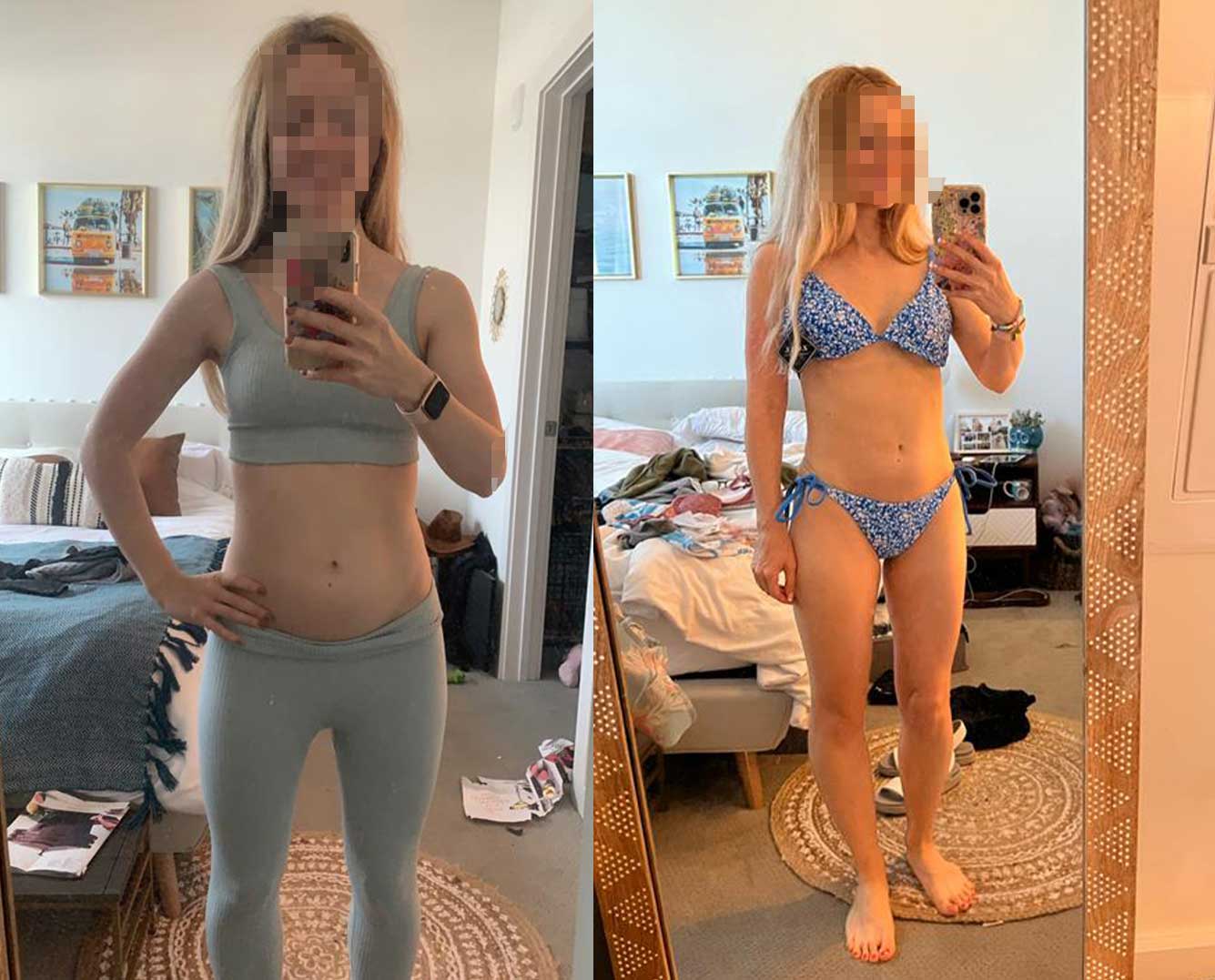
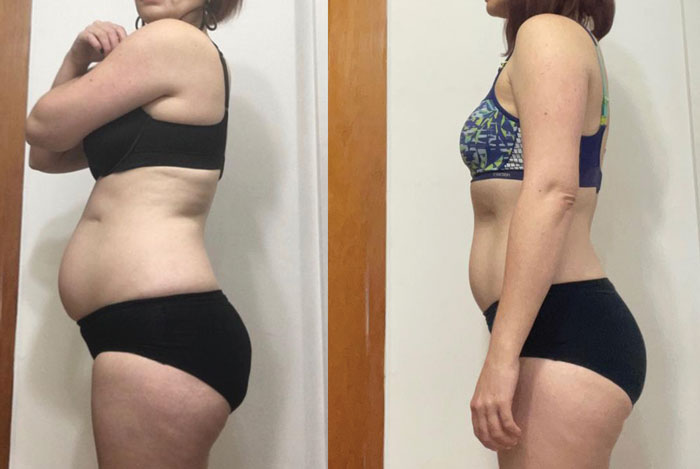
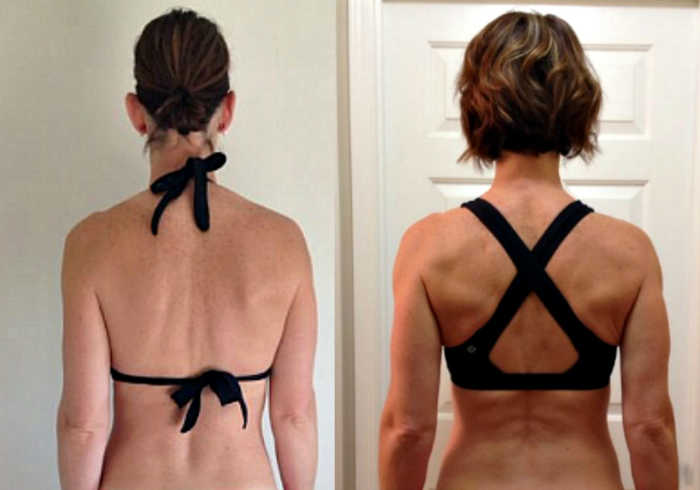
- Weeks 6–12 (Visible Changes in Shape): This is where many women start noticing more visible changes in their bodies. Muscles may look firmer and more defined, particularly in areas like the arms and upper back. Some women notice quite significant changes in this timeframe, while others see more gradual progress. Changes around the glutes and hips can be more subtle, and sometimes you’ll notice the difference in how your clothes fit before you see it in the mirror.
- 3–6+ Months (Significant Body Composition Changes): With consistent strength training and appropriate nutrition, the changes in your physique can become much more noticeable visually.
Think of strength training as a long-term commitment to yourself. Midlife transformations take time, and often you have to work around setbacks and challenges. Remember, your goal is not a short-term body transformation. You’re building the strength and muscle you’ll want to maintain for the next 20, 30 or 40 years. The changes to your shape are an added benefit.

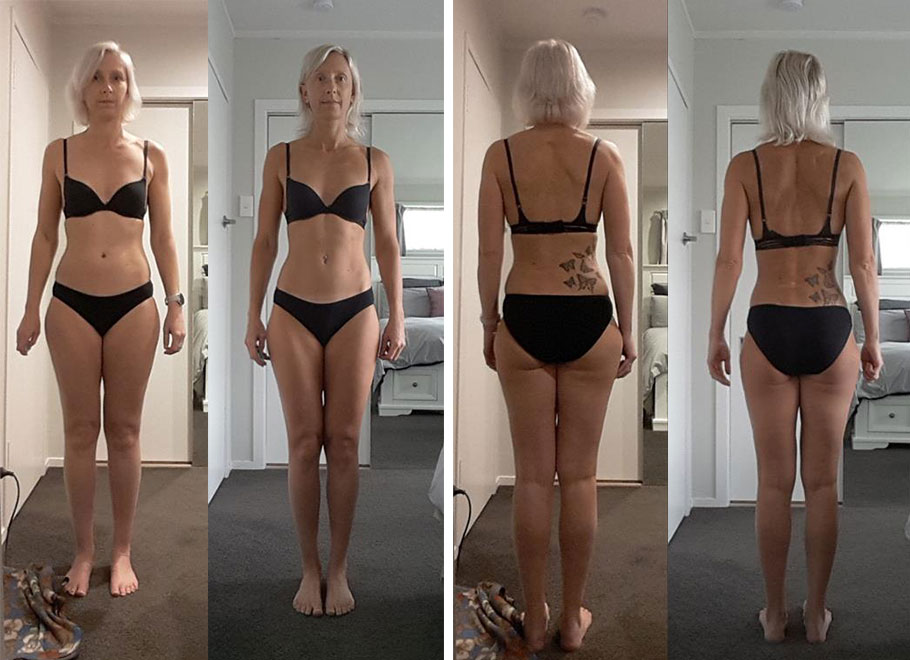
An example of a 6-month client strength training transformation. Lynne was 40 years old when she had this transformation. Read her transformation story.
Making the Commitment To Strength Training & Your Future Self
Starting a strength routine doesn’t need to be overwhelming, intimidating, or complicated, but it certainly can feel that way if you are new to it all.
If you are looking for a structured, supportive way forward that is designed for midlife, you can learn more about my strength training program for women over 40.
You can choose the full package—nutrition and training, or just get started with an 8-week training program.
I’ve help many women get started and fall in love with weight training, and I’d love to help you as well!