By Melanie Durette, ISSA Certified Personal Trainer and Precision Nutrition Coach · Published October 8, 2019 · Updated November 20, 2026

Getting Older Sucks
But there’s something special about being over 40…
If you are in your 40s you might think your best days are past — at least as far as your body is concerned. You are seeing more wrinkles, cellulite and sagging skin than ever before. Your energy, mood and hormones might be all over the place.
Your 40s can feel really rough.
My partner told me I was beautiful the other day. Instead of feeling happy, I thought to myself, “I won’t be hearing that for much longer…”
So believe me, I know how you feel. Getting older sucks. Don’t get me wrong — women over 40 can still be incredibly vibrant and attractive but sometimes it just feels sad to see our youth fade, to feel our bodies change, and to not know if we can do anything about it.
But let me tell you a little secret about being 40-something that’s going to make you feel better. A glimmer of hope if you are willing to grab it.
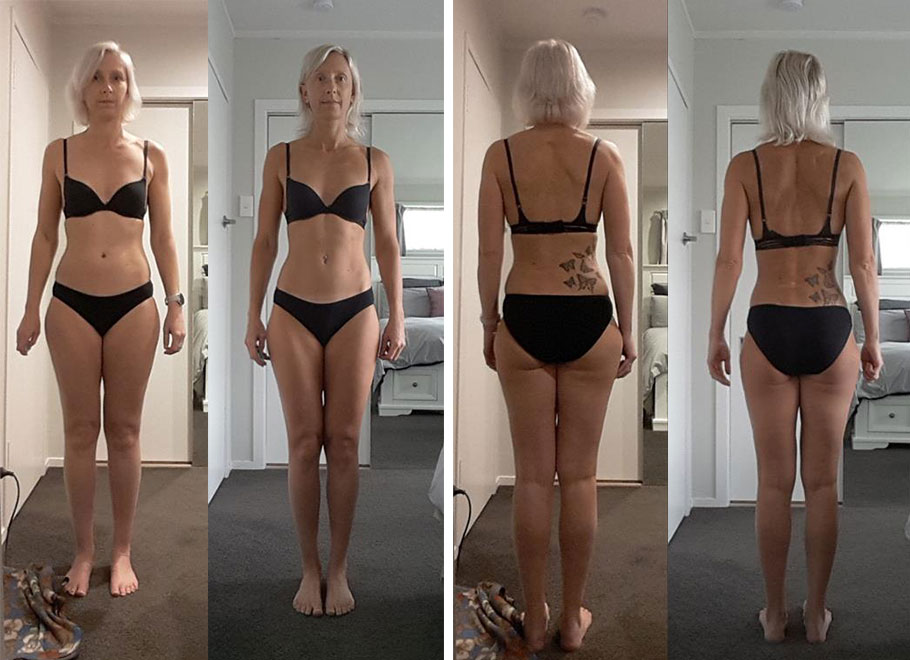
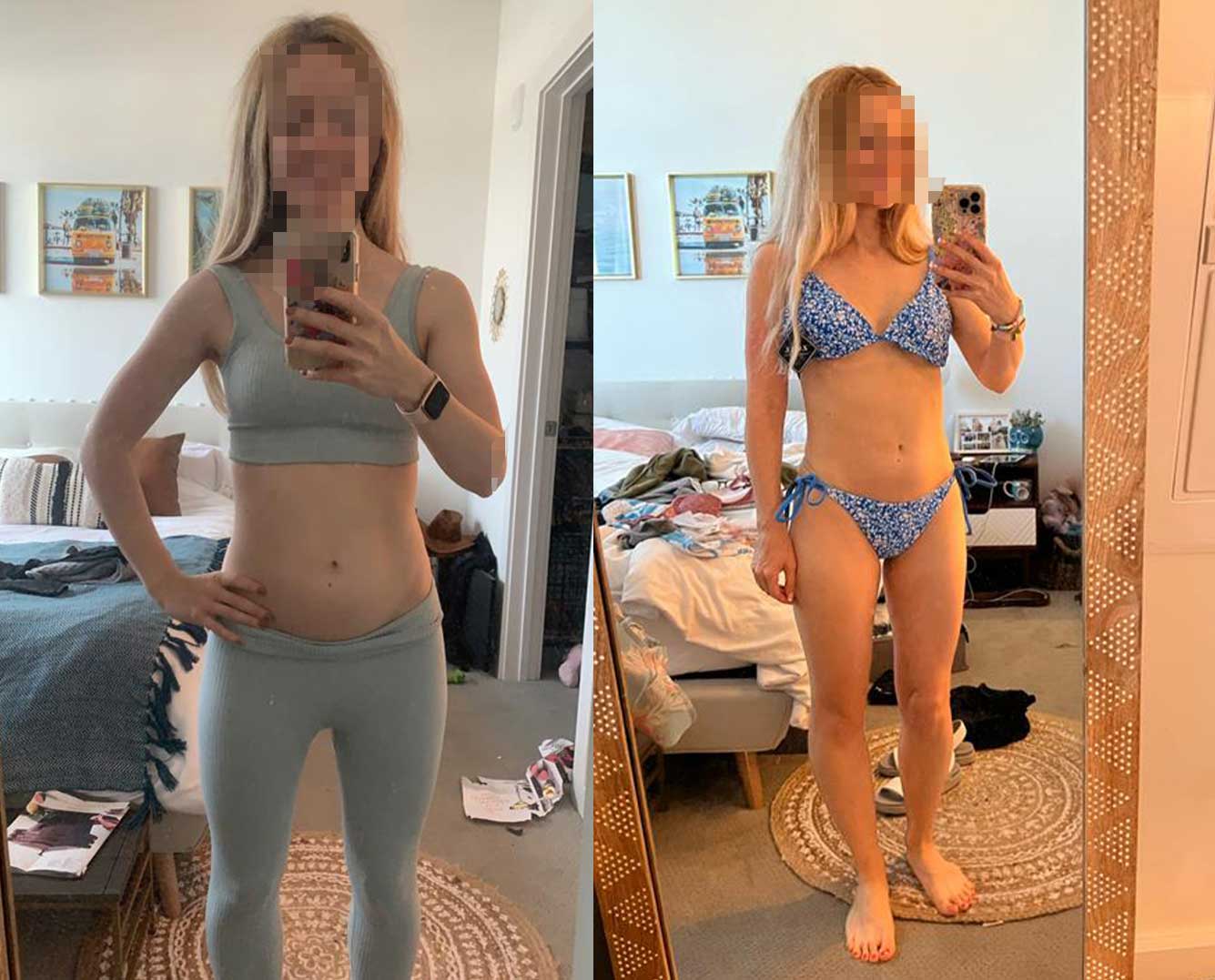
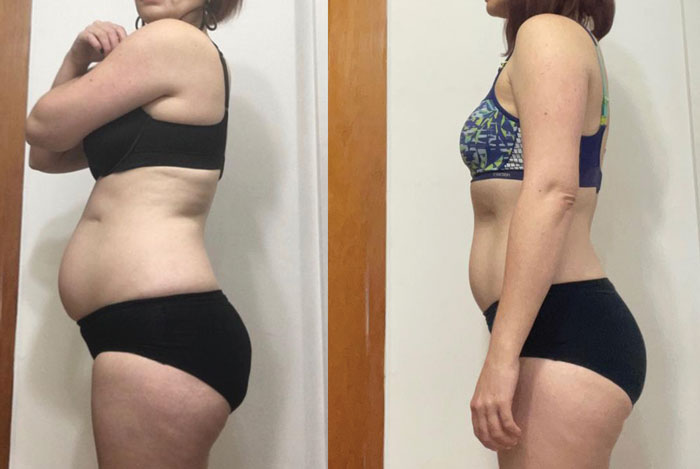
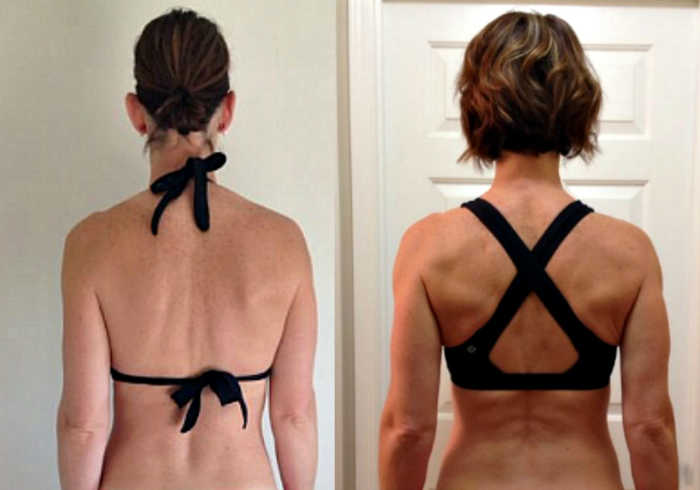
Women in their 40s have the best transformations.
You see, in your 40s, you have more time and resources to invest in yourself. In your 20s, your lifestyle didn’t support major transformations and your budget likely didn’t allow you to hire a coach. In your 30s you were probably too busy with kids or career (or both).
In your 40s it’s completely possible to have a better body than the average 20-something. You can also have dramatic improvements in strength, health, energy and confidence.
This is your time.
For the last decade, I’ve been helping women have major transformations at all ages and I want to help you change not only your body, but the trajectory of your life. So I’ve put absolutely everything you need to know to get started in this Ultimate Guide. First we’ll cover how you should be training in your 40s, and then we’ll cover nutrition.
You really can be the strongest, healthiest version of yourself in your 40s so let’s do this!
It’s actually not that hard…
Before we get into it, I also want to let you know that while this does require work — it’s not actually that hard. If it feels hard right now it’s because you’ve been doing the wrong things. As you’ll learn later in this blog post, everyone, even myself, does the wrong things at the start. And it’s really confusing because everyone is telling you to do something different.
Why listen to me? I’ve been coaching women for well over a decade now, in person and online. You won’t find the latest trend or anything extreme here. Women over 40 get better results from a smarter, more sustainable approach to training. We follow the science and what actually gets results in practice. Sometimes what gets results is individual to you. Your body type, your schedule, your reality.
That’s where coaching can really make a difference. So if you are here looking for some help, and want to skip to the programs, most women start with my strength training programs for women over 40.
How To Train After 40
Train like you are in your 40s, not your 20s
You already know that you need an exercise routine that takes into consideration the changes you are experiencing. That’s why you are here. Your primary focus at this stage of life should be building and retaining strength, but most women want to work on shape too. The good news is we can do both with the right strategy.
Here’s what to focus on:
1. Train strategically to shape your body
Many women assume that if they simply exercise more, their body will automatically take on the shape they want. Unfortunately, it doesn’t work that way.
There’s a science to building shape, and you need to apply it in your training to get results.
While activities like walking, HIIT workouts, and fitness classes can be great for health and fitness, they don’t necessarily provide the targeted stimulus needed to reshape specific areas of your body. It’s also why many women don’t get the results they expect from generic follow-along workouts or powerlifting-style programs. Those approaches aren’t always designed with female body-shaping goals in mind.
As we age, most of us don’t want to just build strength. We are concerned about things such as cellulite, loss of muscle tone, a flatter glutes, softer arms, and changes in body composition. The right training program can help with these things by working on both strength and shape.
Rather than doing random workouts, every exercise should have a purpose allowing you to focus on areas you want to improve. For example, you may want to build stronger, rounder glutes, create more definition through your shoulders and upper back, strengthen your legs, or improve muscle tone in your arms. It’s all possible but you need a strength training program that uses a more strategic approach to muscle development and improving your overall shape.
2. Posture should be a priority.
Many of us spend too much time sitting, driving, working at a computer, or looking down at our phones. Over time, this can lead to rounded shoulders, poor posture, stiffness, and many of the aches and pains we often associate with aging.
That’s why in my programs we place a strong emphasis on strengthening the upper back, shoulders, and postural muscles. Many women are surprised to find that long-standing neck, shoulder, and back pain improves significantly once they begin my programs.
Shoulder problems are also very common as we age. This is due, in part, to declining estrogen and its impact on our tendons. When you train for better posture, you also work all the shoulder stabilizer muscles and help to keep your joints healthy and mobile.
Of course, there are aesthetic benefits too. Better posture makes you look stronger, more confident, and more youthful. The back is an area that tends to shape up and show muscle first so it’s always exciting for my clients to see those new muscles.
Here’s an example of a posture-focused, upper body workout:
3. Your program should be designed with joint health and longevity in mind.
I know it’s tempting to hop on the latest workout trends or do workouts off popular free training apps, but the big problem with generic programs is that they don’t distinguish between a 25-year-old, a 45-year-old, and a 65-year-old. They don’t take into account changing hormones, recovery capacity, joint health, injury history, or the goals that many women have during midlife.
As we age, exercise selection becomes increasingly important. Many of the movements you may have done in your 20s are no longer serving you and can sometimes create more wear and tear than benefit.
In my programs, every exercise is chosen for a reason. We focus on movements that build strength, muscle, shape, and bone health while minimizing unnecessary stress on the joints. For example, many of my ladies have knee issues, pelvic floor concerns, or both! In these situations, the high-impact plyometric exercises commonly found in HIIT and follow-along workouts aren’t always the best choice. Even the way I program exercises like lunges is carefully considered, with a preference for variations that are often more knee-friendly and better suited to this stage of life.
Every workout is thoughtfully designed to challenge your body while supporting your joints and recovery. When you think about it, it makes sense to follow a program that’s designed specifically for your 40-something body. You’ll not only get better results, but you’ll be doing it in a way that helps keep your body strong, healthy, and capable for years to come.
Here’s an example of how we can target trouble areas and build shape while looking after your joints at the same time:
Why A Strength Training Program For Women Over 40 Is Non-Negotiable
When I was in my 20s, I can remember going to the gym and seeing this lady who was probably at least 10 years older than me who looked like she had stepped off the cover of Oxygen. I always thought she had some secret and likely great genetics. The difference was I spent all my time on the treadmill and in group fitness classes — whereas she spent all her time in the weight room.
I only figured this out when I invested in my first personal trainer in my 30s. I learned how to lift weights properly and I followed a good program. And that’s when I had my major transformation. It wasn’t super difficult either. Up until that time I had just been doing the wrong things.
If you are struggling or if you can’t get the body you want, then you are likely doing the wrong things like I was — or not enough of the right things.
In fact, the main reason women seek me out as a coach is that they haven’t been getting results. These women often have great transformations from simply starting a properly designed weight lifting program.
Weight lifting is the right choice at your age and should be your main focus. That’s because a properly designed program can target typical problem areas in ways that other styles of training don’t. Think of this style of training as “functional body sculpting.” It’s “functional” because we focus on things like building strength, balance, mobility and improving joint health. But, at the same time, we also want to shape our bodies and target trouble areas – that’s where the “body sculpting” comes in. And the good news is you can do both at once!
Finally, in our 40s our hormones can be all over the place and we can become more “stress sensitive.” Focusing on weight loss, extreme diets and lots of cardio will only increase cortisol and make you look and feel worse. Weight training and some relaxing cardio like walking or biking outside is often a more effective combo in your 40s. Of course, you also need to dial in your nutrition but we’ll talk about that in the next section.
Want a simple, practical guide to getting started? See my quick guide to strength training for women over 40.
How To Set Up Your Strength Training Program After 40
The best training schedule is the one you will be able to stick to long term. Many of my women train three days per week with express workouts; others train five days per week with full workouts. The most important thing is that your program feels sustainable. If you want to target certain areas, it can be helpful to train 4-5 days per week so you can get the required volume to actually make changes.
Let’s talk about how to structure your week. Let me introduce you to the idea of a “training split.” In training, this simply means how you split up your workouts, usually in a weekly cycle, based on specific muscle groups. The reason we have days focusing on a specific muscle group, such as your back, is that you need enough stimulus to strengthen and develop those muscles in that session. Without this targeted work, you might get stronger, but it’s harder to get the “sculpting” effect.
Here’s an example of a 5-session training week:
| Day | Focus |
|---|---|
| Sunday | Lower body, glute dominant |
| Monday | Shoulders and posture |
| Tuesday | Off |
| Wednesday | Back, possibly extra lower body work |
| Thursday | Triceps and biceps |
| Friday | Lower body, glutes and hamstring focus, possibly extra posture work |
| Saturday | Off |
This is a simplification but it demonstrates how I structure a typical week for someone who wishes to train five days per week. If someone want to train four days, I might give them two upper and two lower focused days. Each client is unique, however, so I adjust programs based on their goals and preferences. I will also usually mix in some full body workouts focused on longevity, including improving tendon health and balance, bone density and additional core strengthening.
The “off” days can be used for longer cardio sessions, sports or activities like group classes. You can also do some cardio on weight training days. However, it is important to remember that in your 40s, rest is just as important as exercise so don’t overdo it!

Not sure where to start?
A program that actually works for women over 40
Join thousands of women who have used Female Fitness Systems to build strength, improve body composition and feel better in midlife.
Don’t forget to assess and adjust — most women miss this!
It’s important to assess your body and your progress, then adjust your training accordingly.
When I first started strength training, I ended up with a physique that wasn’t quite what I wanted. I trusted that my trainer’s program would automatically build the shape I was looking for, but after a couple of years I stepped back and realized that wasn’t the case.
That experience led me to spend years learning how different training approaches influence the way the body develops. Over time, I learned how to assess my physique, identify areas I wanted to improve, and make small adjustments to my training to create a more balanced shape.
This ongoing assessment and adjustment is often missing when you’re following workouts from an app, attending group fitness classes, or using generic training programs. Think of your body as a work in progress. Rather than chasing weight loss alone, you’re continually building strength, improving function, and shaping your physique over time. In my experience, this approach makes training far more enjoyable and sustainable.
However, this isn’t about being critical of yourself or obsessing over perceived flaws. Having worked with women for more than a decade, I’ve learned that most of us are not the best judges of our own progress. We tend to focus on what hasn’t changed rather than what has. Many women also don’t fully understand their natural body structure and what’s realistically achievable for their body type.
This is where coaching can be incredibly valuable. A good coach provides objective feedback, helps you set realistic expectations, and makes the small adjustments that keep you moving toward your goals.
You can also learn more about your Body Type, the best training style for you, and setting realistic goals, with my Free Body Type quiz.
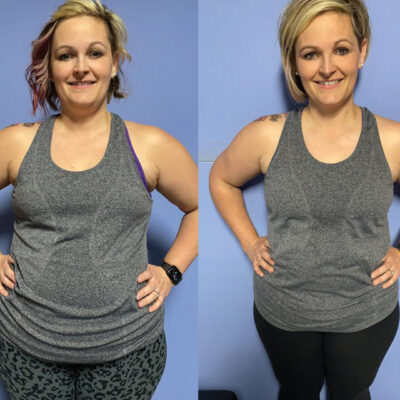
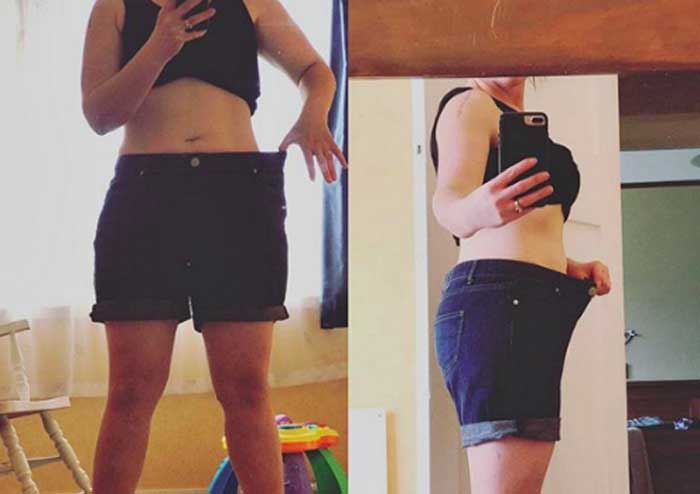
One of the biggest mistakes I see women make is changing programs too often or not sticking with a plan long enough to see meaningful results. All of the transformation photos you see on this website happened over 6–12 months, not 8 weeks. You’ll often notice positive changes within the first couple of months, but significant transformations take time despite what social media might suggest.
The real key is finding a program you enjoy and can stick with long term, because consistency is what ultimately creates lasting results.
Sorting Out Your Over 40 Nutrition
Why You Aren’t Getting Results
What you eat has a powerful impact on how you age, how you feel, and how your body changes over time. But before we talk about healthy aging, let’s talk about why you may not be getting the results you want. After coaching women for more than a decade, I’ve found that most women struggle for one (or more) of the following reasons:
- They don’t have a clear understanding of how much they’re actually eating.
- They’re not eating enough protein to support muscle, recovery, and healthy aging.
- They don’t have a consistent system for managing their nutrition.
- They haven’t found a way to balance healthy eating with real life.
The good news is that none of these problems are unique to women over 40, and they can all be solved.
One thing I do want to address is the idea that weight gain in midlife is completely out of your control. Hormonal changes can absolutely affect hunger, appetite, energy levels, recovery, and where you tend to store body fat. They can make the process more challenging, but they don’t make it impossible.
The women you see achieving amazing transformations in their 40s, 50s, and beyond aren’t relying on willpower or perfection. They simply have a good plan, follow it consistently, and make adjustments when needed.
If you’re not getting results, the solution is usually more structure, not more restriction. And a good starting point is calories and protein.
Start here:
Calories in need to be less than calories out.
If you’re not getting results, you need some kind of structure. That means consistently counting your calories with an app or following a calorie-controlled meal plan. Why? Because “winging it” doesn’t work. If you’re not tracking something, how can you expect to change it? And if you don’t have accountability, you’ll keep spinning your wheels and feeling frustrated.
Almost every woman I’ve worked with who starts consistently tracking loses weight. Yes, you may have to work a bit harder now that you are older, but it’s completely possible for you to get results too.
Finding Your Balance With Nutrition In Your 40s
One of the biggest challenges in your 40s is consistency. You’re probably enjoying more meals out, more holidays, and more social events than you did in your 20s – and you shouldn’t have to give that up.
Yes, you deserve to enjoy your life. But if you are constantly dissatisfied with your body, your energy, or your health, you’re not truly happy either.
So there is a balance to be found. You don’t have to give up wine or your social life, but you need some strategies and accountability to keep yourself on track with your nutrition as well. (Note: If you consume alcohol most days, you will likely need to change that habit to get results.)
If you are struggling with finding that balance, I’ve helped so many women like you. In my programs, I don’t ask you to give up your lifestyle. One of my jobs as a coach is to help you decide what your priorities are and how to enjoy life while still making progress. In fact, many women are surprised by how much they get to eat when doing my programs!
What You Eat Affects How You Age
While you can’t erase every wrinkle, you can absolutely influence how you age and good nutrition is one of the most powerful tools you have. This is a huge topic on its own, but here’s what I want you to remember: any diet you follow should also support longevity.
Most meal plans out there focus only on weight loss or muscle gain. They rarely consider healthy aging, muscle preservation, bone health, energy levels, or how your nutritional needs change over time.
I’ve helped women reduce pain, improve energy and ease mood swings in their 40s through simple changes to their nutrition. And yes — carbs can help with energy and mood in midlife. So be wary of any diet that tries to cut them out entirely.
The good news? I’ve spent years building a plan that works: for body composition, energy and longevity. It’s not about cutting out the foods you love — it’s about learning how to eat in a way that supports your body and your life.
Start Your Own Transformation
This is your time. Don’t miss out.
Before you start any program, ask yourself:
Is this designed for where I’m at in life?
By now, you’ve probably realized that getting great results in your 40s isn’t about working harder. It’s about having the right strategy.
A program that helps you build strength, maintain muscle, support your joints and bones, improve your body composition and shape, and fits into your lifestyle is going to take you much further than another generic workout plan.
This is your time. You can absolutely build the strongest, healthiest, and most confident version of yourself in your 40s and beyond. I’ve helped women at all stages of life do exactly that, and I’d love to help you too.
Give yourself the opportunity to see what’s possible.