Last updated: October 2026

Everyone wants leaner legs…
When I was younger I remember being called “thunder thighs.” I wasn’t overweight but I had very muscular legs and I envied my friends with slimmer body types. I didn’t know it back then but I had a mesomorph (muscular) body type and because I did so much figure skating and rollerblading, I had thick. muscular quads.
If you are reading this, you’ve got a complaint (or complaints) about your legs and you aren’t alone. One the biggest issues I’ve helped ladies address with my online training programs is the shape of their legs. A lot of the struggle happens because you don’t understand your body type and you don’t know how to train to enhance your natural shape.
It’s also my job as a coach to help you understand what’s actually possible for your body type so you can set realistic goals and feel great about how you look. I can’t emphasize enough just how important it is that you stop comparing yourself to women who don’t have your natural shape, which is a big problem I see all the time. For example, I will never have the same glute shape or leg shape as someone with a completely different body type, no matter how hard I train. It’s just not possible because of my genetics and the shape I was born with. I could spend my whole life feeling dissatisfied about my legs — or I could focus on the positive things about my body instead.
My job is to help you understand what is possible for your body type so you can set realistic goals and feel great about how you look.
In this article, I cover the most common complains women have about their legs, why they happen and the strategies I use to address them. You’ll also find the exercises and training principles I recommend to create leaner-looking legs, build firmer glutes, and get the best results for your body type.
LEG COMPLAINT #1: Thick, Muscular Legs
Are your legs “thick” or “bulky?” Are you someone who easily gains muscle? If I even walk by the squat rack I can feel my legs growing — so I understand this body type well. I’ve spent my whole life dealing with this body type.
Mesomorphs — or “Strong Frames” as I call them — have some really good things going for them, but they often aren’t happy with their legs. These women build muscle easily, and without the right approach, often feel bigger and thicker from weights, especially in their lower body.
All the advice out there to just “squat” and train heavy doesn’t work. It just makes our legs bigger.
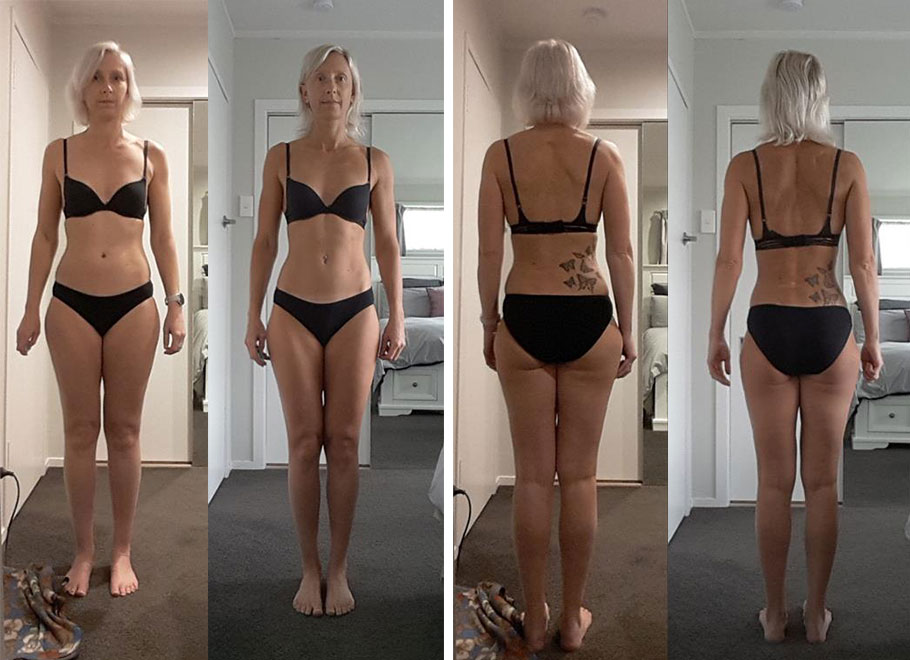
Case in point. Check out my photos below. Sorry about the photo quality — when I took these so many years ago I never planned to share them with anyone. The first photo was taken about two years after I started training with a trainer, and before I knew what I was doing in the gym. For two years, he had me doing very heavy squats, lunges and leg presses, as well as leg extensions for the quads. You can see how my legs looked after two years of training like that.
Around the time of taking the first photo I decided my legs were too thick and lacked shape, so I changed how I trained legs reducing both volume and the amount of weight I lifted. I quit doing quad dominant exercises like squats and leg extensions, other than some higher rep, body or band squats. The second photo shows how my legs looked about nine months later. You can see they have better shape and definition, especially around the knee area.

If you, like me, have thick muscular legs, you may not want to focus on compound movements and training really heavy all the time. Instead, prioritize developing your glutes to build size and fullness, and create separation from the legs, which gives the illusion of smaller thighs and legs. I don’t train my legs to failure ever — other than my glutes — and you can see from my most recent lower body photo below taken in 2026 that I still have a lot of muscle in my legs, even after 15+ years of training this way.
So when you hear messages on social media that you need to “lift heavy” or do compound movements, remember your experience matters. Many women know these movements aren’t for them not just because of the shape they want to build, but for avoiding injury and joint pain as they get older too. Trust your instinct about what’s right for you.

Learn more about how I leaned out my legs in the video below.
LEG COMPLAINT #2: Cellulite (& Saddlebags)
Most women have some cellulite on their glutes and legs, and despite what the beauty industry would like you to believe, there isn’t a miracle cream, treatment or exercise that can permanently get rid of it.
Some body types are more prone to cellulite than others. For example, women with pear-shaped or hourglass body types often carry more body fat through the hips and thighs and may notice cellulite even when they are relatively lean. This is important to understand because cellulite is not simply a body fat issue. Many lean, healthy women still have cellulite.
Cellulite is influenced by a combination of factors including genetics, hormones, body fat distribution, skin thickness, collagen quality and age-related changes in the connective tissue beneath the skin. That’s why it can be so stubborn and why results vary so much from one woman to another.
Lower estrogen levels during perimenopause and menopause can make cellulite more noticeable. As estrogen declines, circulation, collagen production, and skin elasticity are affected, making the skin less firm and allowing cellulite to become more visible.
The good news is that while you may not be able to eliminate cellulite completely, you can often improve its appearance. Strength training, maintaining a healthy body composition, eating a nutritious diet, supporting skin health and leading an overall healthy lifestyle can all help. The key is understanding that cellulite usually responds to a combination of factors rather than a single solution.
In my experience, the women who see the biggest improvements are those who take a comprehensive approach. One of my clients decided to compete in a fitness competition and was already training hard and tracking her nutrition carefully. However, her cellulite was not improving so we looked at every aspect of her lifestyle, including food quality, skin health and even xenoestrogens, which we addressed by removing all plastic food containers and drink bottles. We also added some additional glute and leg work using bodyweight exercises and resistance bands to increase circulation and movement without building too much mass. It was the combination of many small changes, rather than any one thing, that produced the most noticeable results.

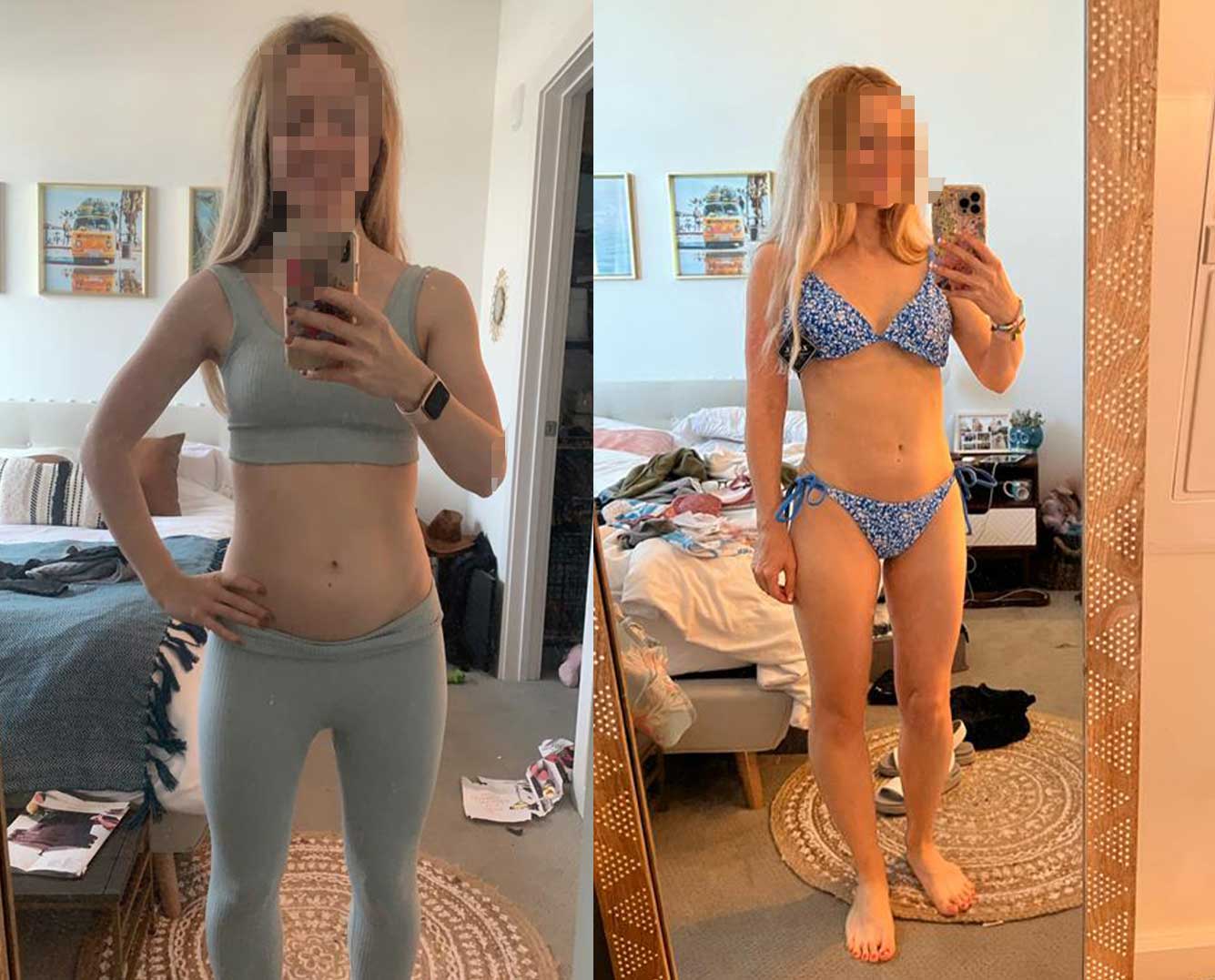
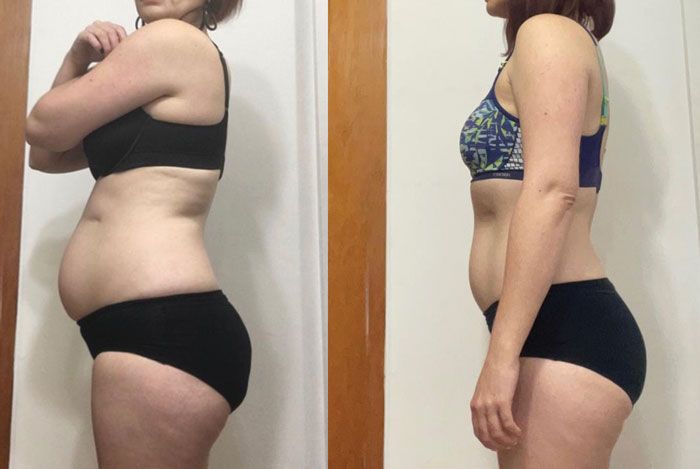
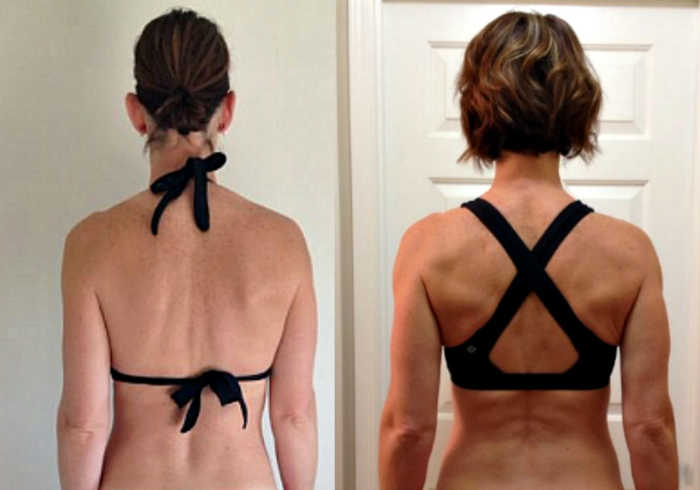
If you are trying to target cellulite, training volume and frequency is also important. Ideally you would train lower body at least twice a week, focusing on your glutes and back of the legs where we tend to see the most cellulite. Ash, shown in the photos below, is a good example of the hourglass shape. Even when she’s lean, she struggles with cellulite on her glutes. When I set up a program for her where she trained with two full lower body workouts each week, and one additional day where we mixed in some targeted glute work with an upper body workout, she finally noticed a shift in how her glutes looked.

One important consideration is equipment. You can absolutely get good results training at home, especially if you have a few dumbbells and resistance bands. However, when it comes to shaping the glutes, having access to a wider range of weights and equipment can be an advantage.
Many of my clients notice a bigger improvement in their glutes and lower body when they move to a gym program, or at least complete their lower body workouts in a gym environment. Exercises such as hip thrusts, leg presses, cable glute work and heavier strength training can be more difficult to replicate at home.
If you enjoy training at home but have access to a gym for some workouts, that’s often a great compromise. In my online training program, you can choose either a home or gym program, or access both so you can mix and match depending on your schedule and available equipment.
It’s also common for women with pear-shaped and hourglass body types to struggle with “saddlebags” — a term used to describe the area of fat stored on the upper outer thighs. Because these body types naturally carry more body fat through the hips, glutes and thighs, this area can remain noticeable even when you are relatively lean.
Like cellulite, saddlebags are strongly influenced by genetics and fat distribution patterns. While you can reduce their appearance through overall fat loss and by building muscle in the glutes and legs, you can’t completely change where your body prefers to store fat. Understanding this can help you set realistic expectations and focus on creating the best shape possible for your body rather than focusing on what may not change as much as you want.

Not sure where to start?
A program that actually works for women’s bodies
Join thousands of women who have used Female Fitness Systems to build strength, improve body composition and feel more confident with their natural shape.
✓ Protein and nutrition made simple
✓ Fat loss strategies for women
LEG COMPLAINT #3: Flat, Saggy Bottoms
You may have a flat bottom, no bottom at all, or areas that seem saggy or less perky than you’d like. This is particularly common in naturally leaner women who don’t carry much muscle mass, as well as women whose main form of exercise is walking, running, cycling, yoga or other activities that don’t provide enough resistance to build significant muscle in the glutes. And as many women discover, pregnancy, menopause and aging can also change the shape and firmness of the glutes over time.
The good news is that strength training can dramatically improve the size, firmness and overall appearance of your glutes. In my online training programs, most women notice a lifting effect and for the glute/hip circumference to increase slightly as the glutes firm and shape up.
The key is being strategic with your exercise selection and progressive overload, which simply means asking your muscles to do a little more over time. This may involve lifting heavier weights, increasing repetitions, improving exercise technique, slowing the tempo, or progressing to more challenging exercise variations. These are things you don’t get when you do follow along style workouts or just train randomly.
One of the biggest mistakes I see is women doing lots of lower body exercise without actually challenging their glutes. If your quads tend to dominate or you’re rushing through repetitions without feeling the target muscles working, you may not be getting the changes you want. It’s important you choose the right exercises for your body and perform them in a way that allows the glutes to do the work.
Your Lean Leg Workout Plan
In this section I’ll give you some tips for which exercises you should be doing if you want leaner legs, without bulk and thickness particularly in the thighs. How you train depends on your goals and body type — you may love heavy squats and that’s perfectly fine.
If you want to learn more about training for your body type, you can take my free Body Type Quiz here.
If you are worried about making your legs bigger you may want to limit:
- Heavy squats
- Heavy leg presses
- Weighted lunges
- Leg extensions
- Stationary bikes (ie. especially at hard levels like the ‘mountain climb’ in cycle classes)
- Stairclimbers
To shape up your glutes and reduce the appearance of cellulite, incorporate these exercises into your training:
- Glute bridges or hip thrusts (weighted, single leg or any variation)
- Cable kickbacks or donkey kicks on a machine
- Hip abduction on a machine or cable, or with bands
- Hamstring curls (on a machine or stability ball)
- Stiff leg deadlifts or Romanian deadlifts
- Good mornings, pull throughs and sumo deadlifts (more advanced exercises so work up to these)
For best results and to make a really visible change, I recommend incorporating glute training into your program three times a week. In my programs this usually includes one full dedicated lower body day, one “backside” workout where we train glutes and hamstrings as well as some exercises to target the back and posture, and then glute work at the end of one upper body workout.
Here’s an example of some of the lower body exercises I do:
And here are some more unique exercises that will help shape up your glutes without growing your legs:
Your Body Is A Work In Progress
View your body and especially your legs as a work in progress. Transformation takes time!
In the end, the best way to train your legs depends on your body type, your genetics and your goals. Be thoughtful about your training and assess your progress from time to time. If your legs are becoming more muscular than you’d like, you may need to pull back on quad-dominant exercises or adjust your training volume. If you want more shape through your glutes, you may need to focus on building more muscle. The right approach is different for every woman.
This is exactly why so many women struggle when they try to piece together advice from social media, fitness magazines and random workout videos. The training that works for one body type can be completely wrong for another.
If you’ve read this article and realized you’re not entirely sure how you should be training for your body or that you’d like more support, that’s where I can help.
When we work together through my online training programs, I’ll help you understand your body type, identify realistic goals, choose the right training approach and make adjustments along the way as your body changes. Instead of wondering whether you’re doing the right exercises, you’ll have a clear plan designed to help you get the best results possible for your shape, goals and stage of life.
Many of my clients stay with me for years because their training evolves with them. Whether your goal is leaner-looking legs, firmer glutes, improved body composition or simply feeling more confident in your own skin, I’d love to help you create a plan that gets you there.

You May Also Like
Why Inner Thigh Fat Is So Hard To Lose: What You Can Do About It