
Key Points: Why Fat Loss After 40 Is More Challenging
If you feel like your body has “stopped listening” to diet and exercise, you aren’t imagining it. Here is the biological reality of fat loss in perimenopause:
The Problem: Declining estrogen makes your GLUT4 “locksmiths” (the proteins that move sugar into your muscles) sluggish. Instead of being burned for fuel, glucose is redirected to be stored as visceral (belly) fat.
The Weight Loss Trap: Excessive cardio and dieting increase cortisol, which further jams the “lock,” making insulin resistance worse.
The Anabolic Shift: After 40, you face anabolic resistance, meaning you need more targeted signals to keep the muscle that drives your metabolism.
The Solutions:
Mechanical Tension: Heavy strength training “picks the lock” by activating GLUT4 without needing estrogen.
Leucine Threshold: Hitting a 2–3g leucine threshold per meal to override anabolic resistance and protect your muscle mass.
Why Fat Loss After 40 Feels Harder – Even When You Do Everything Right
If you’re wondering why fat loss after 40 feels harder – even though you’re doing everything right – this is for you.
After 40, it can feel like your body changed the rules. But in truth, the fundamentals of fat loss haven’t changed.
Calories still matter.
Strength training still matters.
Sleep and recovery still matter.
What has changed is that after 40, your body simply requires more consistent care to get results. In perimenopause, the margin for error is smaller. The same habits that once “worked well enough” can now quietly stall fat loss.
To understand why fat loss feels harder after 40 and in perimenopause, we have to look at what’s happening at the cellular level and something I call the “GLUT4 locksmith problem.”
Prefer to watch instead? I break this down step-by-step in the video below.
The Estrogen-GLUT4 Connection (Why Fat Is Stored More Easily After 40)
In your reproductive years, estrogen played a critical role in metabolic health.
One of its key jobs was supporting insulin sensitivity – helping your body move glucose out of the bloodstream and into muscle cells, where it could be used for energy rather than stored as fat.
This process relies on a protein called GLUT4 (Glucose Transporter Type 4), which is found inside your muscle cells.
Think of GLUT4 as a locksmith inside those cells.
When you eat carbohydrates, blood sugar rises. Insulin is released and signals GLUT4 to move from inside the muscle cell to the surface, “unlocking the door” so glucose can enter the muscle and be burned for fuel.

What Changes in Perimenopause – The “Locksmith” Problem
As estrogen levels fluctuate and decline during perimenopause, this system becomes less efficient.
Without consistent estrogen signaling, GLUT4 becomes slower and less responsive. Instead of moving quickly to the surface of the muscle cell, many GLUT4 transporters remain “asleep” inside the cell.
When muscle becomes less efficient at taking up glucose, the body shifts away from using it for energy and toward storing it – with a strong bias toward abdominal fat after 40.
This is one of the key biological reasons fat loss after 40 becomes harder and you might feel like your stomach is where it all goes.
This doesn’t mean fat loss is impossible. It means the body is now less tolerant of muscle loss, inactivity, and stress. Or, put another way, your body needs more care and consistency at this stage of life.

Why Dieting and Cardio Become Less Effective For Fat Loss After 40
When fat loss after 40 stalls, most women instinctively respond by eating less and doing more cardio. This approach often backfires because our physiology has changed.
Chronic Cardio, Dieting, and Cortisol
Using cardio as the primary means for weight loss, especially when combined with prolonged calorie restriction, increases cortisol, the body’s primary stress hormone.
During perimenopause, baseline stress is already higher due to fluctuating estrogen, disrupted sleep, and changes in nervous system regulation.
When cortisol remains elevated for long periods:
- insulin signalling becomes less efficient
- GLUT4 becomes less responsive
- and the body shifts toward energy conservation rather than fat loss.
This is especially relevant after 40, because cortisol also encourages fat storage around the abdomen.
In other words, pushing harder with cardio and dieting can unintentionally create a higher-stress metabolic environment, one that makes fat loss more difficult rather than easier.
This is the reason that in my coaching I have always encouraged my ladies to “do less” to lose weight – not more. In fact, just this past week, I notice a client’s weight loss was plateauing, and rather than further restrict calories or increase exercise, I suggested she work on sleep and stress management. Sure enough, the scale started moving down again simply from her making an effort to turn off devices and sleep earlier.
If you’d love this kind of support, learn more about my Premium Coaching Program here.
The Muscle Loss Problem
We naturally lose muscle as we age, but your lifestyle determines whether that loss is slowed or accelerated.
Aggressive calorie deficits increase the risk of losing lean muscle mass. Not strength training – or training inconsistently or without sufficient load – further compounds the problem.
This matters because muscle is the preferred site for glucose disposal. Less muscle means fewer places for glucose to go, increasing the demand on insulin and worsening insulin resistance over time.
As muscle mass and muscle quality decline, the system becomes less efficient:
- blood sugar is managed less effectively
- fat storage becomes more likely
- and fat loss requires increasingly extreme effort.
This is why many women find that traditional dieting approaches stall fat loss after 40, despite high levels of discipline. It’s not simply an “eat less” or “lose weight” issue.
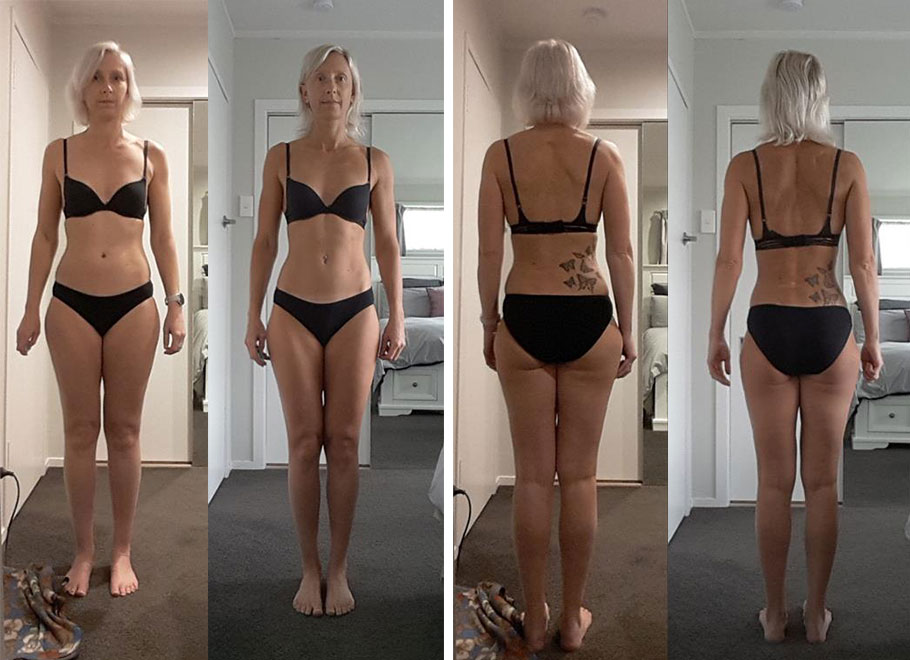
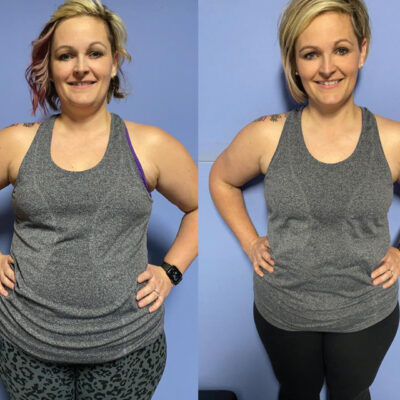
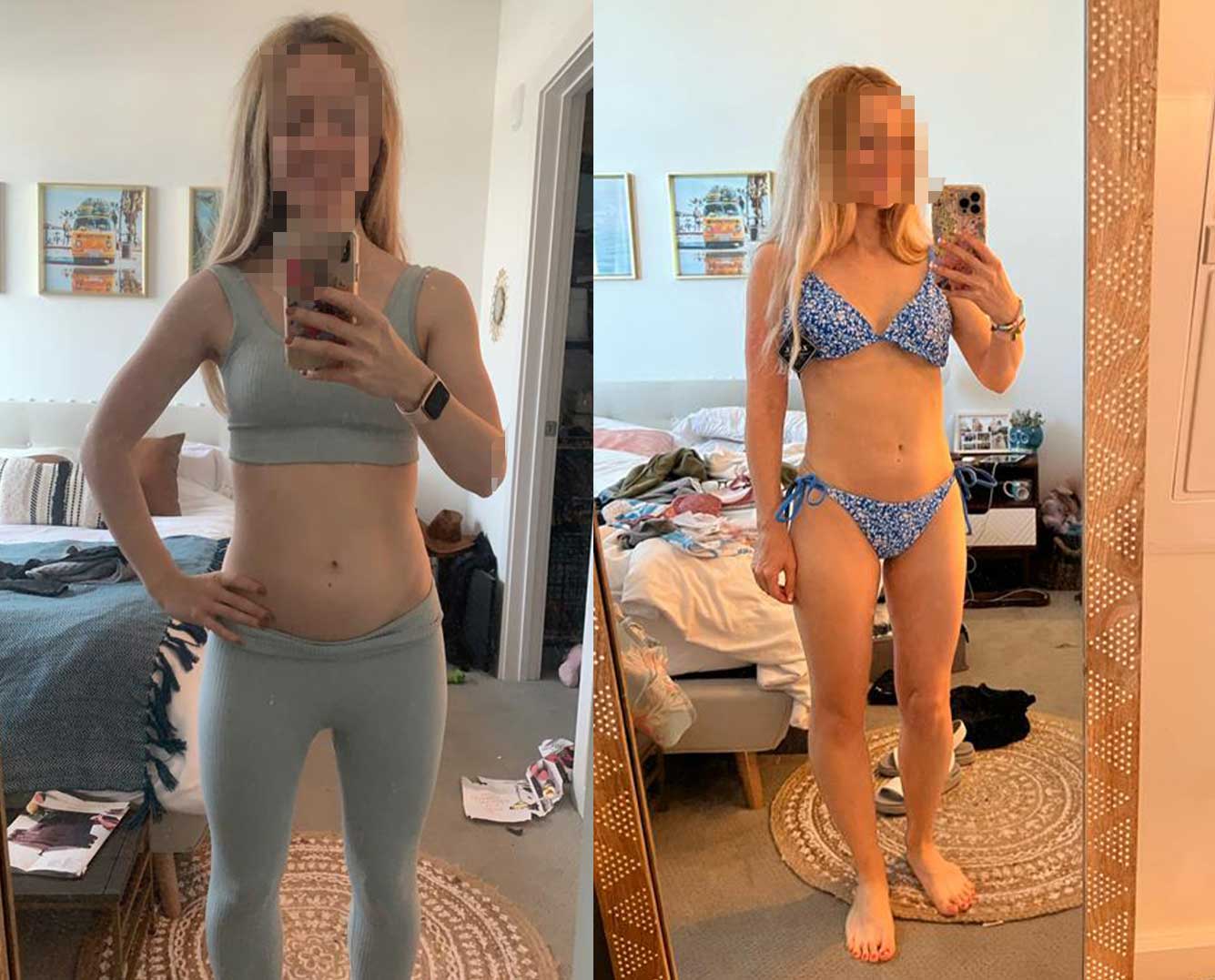
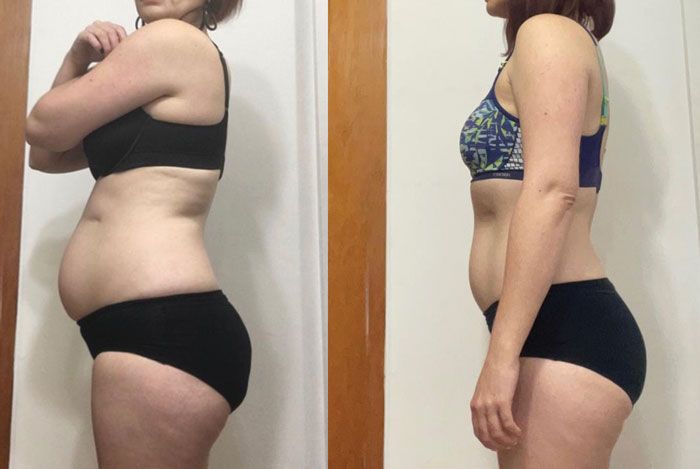
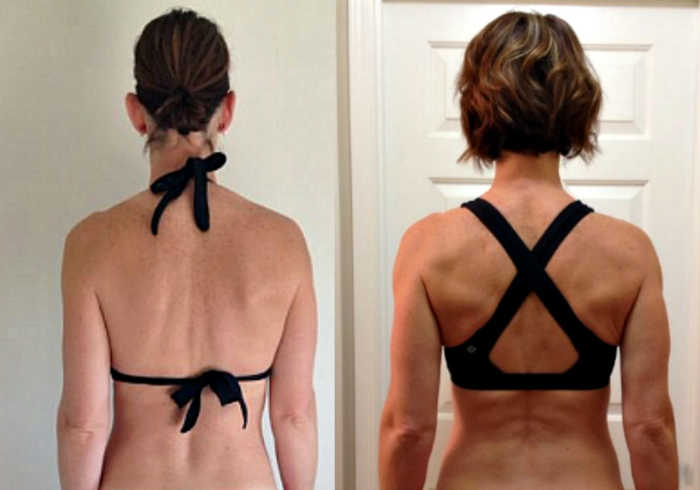
This is exactly what my client Magen experienced before she found her ‘Life Fix.’ You can read how she overcame the midlife plateau and lost 36lbs here.
How to “Pick the Lock” – Working With Midlife Physiology
The good news is that estrogen is not the only way to activate GLUT4.
I’m going to give you two things you can do to trigger GLUT4 and keep this system working in your favour.
One works in the moment.
The other works over time.
Mechanical Tension (Heavy Strength Training)
The first piece is exercise – particularly strength training.
When muscles contract under real load – lifting weights that feel genuinely challenging – they trigger GLUT4 to move to the surface of muscle cells through contraction-driven signalling pathways.
This mechanical tension (force on your muscles) allows glucose to be taken up into muscle independently of insulin, which is especially important in a low-estrogen environment.
And the good news is this doesn’t require building large amounts of muscle. From a metabolic perspective, muscle contraction itself is the signal.
Cardiovascular exercise can also stimulate GLUT4 and improve insulin sensitivity.
But the long-term capacity of this system depends on how much active muscle tissue you have. If muscle mass declines, the system has fewer places for glucose to go. Think of muscle as having a bigger suitcase – something we all need and love!
That’s why maintaining muscle becomes so important as we age and why strength training isn’t optional. It’s foundational for fat loss and metabolic health.
Overcoming Anabolic Resistance with Adequate Protein
While strength training activates GLUT4 in the moment, maintaining muscle tissue is what keeps the system working long-term.
As we age, we experience something called anabolic resistance, meaning the body becomes less responsive to signals that build muscle, including protein intake. Smaller or inconsistent protein doses that once “worked” are often no longer sufficient to preserve lean mass.
To stimulate muscle protein synthesis (to build and protect muscle mass), you should strive to reach the leucine threshold – typically achieved by consuming approximately 2-3g of leucine per meal. To hit that 2-3g leucine threshold, you’re looking at roughly 25-40g of high-quality protein per meal (think a large chicken breast, 6oz of steak, or a high-quality whey isolate).
Protein doesn’t activate GLUT4 on its own. But by helping to preserve muscle, it keeps the GLUT4 system responsive – protecting metabolism over time and reversing or delaying some of the body composition changes we normally associate with aging.
How The Over 40 Transformation System Helps With Fat Loss After 40
If fat loss feels harder after 40, you’re not imagining it. As you’ve learned, the basics still work – but inconsistency now comes at a higher cost. Cheat meals, alcohol, and time away from training tend to have a bigger impact than they once did, which means your body needs more care and consistency at this stage of life.
That’s exactly why I created the Over 40 Transformation System.
It’s designed for women who are already trying, but want a clear framework that reflects how the body actually responds in midlife – hormonally, metabolically, and mechanically.
Inside the system, we focus on:
- Strength training that supports both strength and shape
- Adequate protein intake to support muscle mass and address anabolic resistance
- Clear structure that removes guesswork and frustration
If you’re ready to stop experimenting and follow a clear, supportive path that aligns with your body now, you’ll find everything you need here.
Ready for your own transformation?
Learn more about my most comprehensive training and nutrition program – tranforming bodies and lives of women over 40 just like you!